
Creating A Path To A Work-Optional Future.
As a busy professional, you spend a lot of time worrying about your practice – you shouldn’t have to worry about your money, too.
Timberview Capital helps busy professionals to create new paths towards financial independence by investing alongside us in real estate.
"I first spoke with Tyson in the Fall of 2022 and shortly after, I started investing alongside Timberview Capital. I couldn't be more pleased with the opportunities that I have been able to be a part of. I have already seen significant tax savings and monthly distributions! Everything that Tyson speaks about in his webinars is true and the team has truly been committed to my financial success!"
— Ryan N. Sieg, MD
"I have had the pleasure of working with Tyson Cobb on 4 separate multi-family real estate transactions, and it has been a fantastic experience. Tyson is extremely knowledgeable, professional, and is able to explain the transactions in terms that are easily understandable. I would recommend him to anyone interested in investing in multi-family properties."
— Henry T. Leis, MD
"Tyson has a wealth of experience and a deep understanding of real estate investing. He is able to access value creating opportunities across multiple property classes. He has a proven track record of success and I've enjoyed working with him."
— Stacey H. Berner, MD, MBA
"I have worked with Tyson on multiple investments since 2023, and have found him to be not only very knowledgeable, but also very focused on educating even the most novice investor. As a beginner in this space, this attention was very much appreciated. I would recommend you book a call with Tyson and get started."
— Shawn Hennigan, MD
"I first spoke with Tyson in the Fall of 2022 and shortly after, I started investing alongside Timberview Capital. I couldn't be more pleased with the opportunities that I have been able to be a part of. I have already seen significant tax savings and monthly distributions! Everything that Tyson speaks about in his webinars is true and the team has truly been committed to my financial success!"
— Ryan N. Sieg, MD
"I have had the pleasure of working with Tyson Cobb on 4 separate multi-family real estate transactions, and it has been a fantastic experience. Tyson is extremely knowledgeable, professional, and is able to explain the transactions in terms that are easily understandable. I would recommend him to anyone interested in investing in multi-family properties."
— Henry T. Leis, MD
"Tyson has a wealth of experience and a deep understanding of real estate investing. He is able to access value creating opportunities across multiple property classes. He has a proven track record of success and I've enjoyed working with him."
— Stacey H. Berner, MD, MBA
"I have worked with Tyson on multiple investments since 2023, and have found him to be not only very knowledgeable, but also very focused on educating even the most novice investor. As a beginner in this space, this attention was very much appreciated. I would recommend you book a call with Tyson and get started."
— Shawn Hennigan, MD
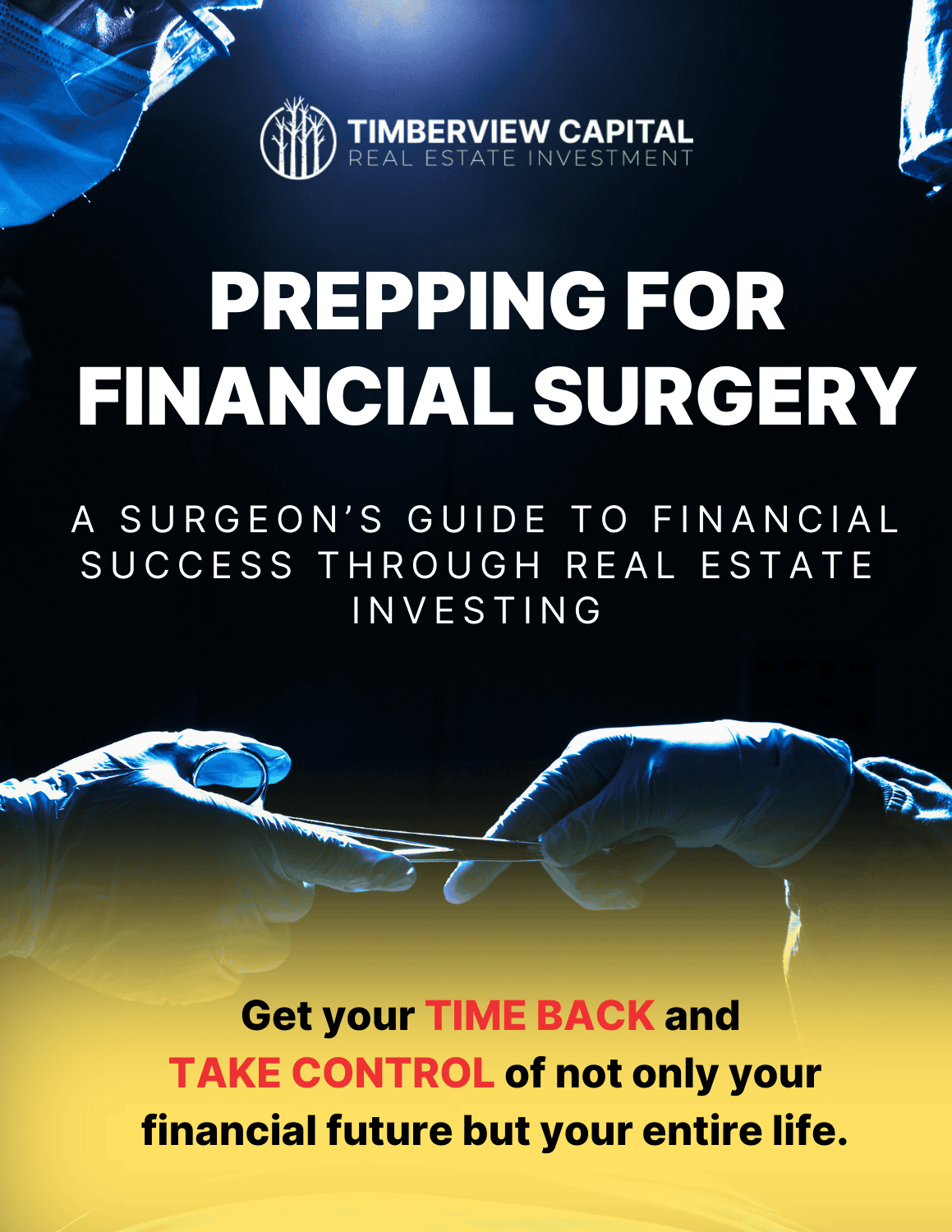
Are you a surgeon or other high income professional interested in transitioning into commercial real estate or other alternative investments?
Download our free eBook to start your path towards a work-optional future and secure your financial freedom!

Our mission is to be a trusted partner on the journey to financial success—helping individuals and families build wealth and create a legacy through real estate investments, other alternative assets, and financial education.
Timberview Capital provides successful professionals with a unique path towards real estate investment and other alternative investments. We are committed to persistently investigating the best markets, properties, and teams, allowing our partners to make informed investment decisions based on comprehensive and up-to-date information.
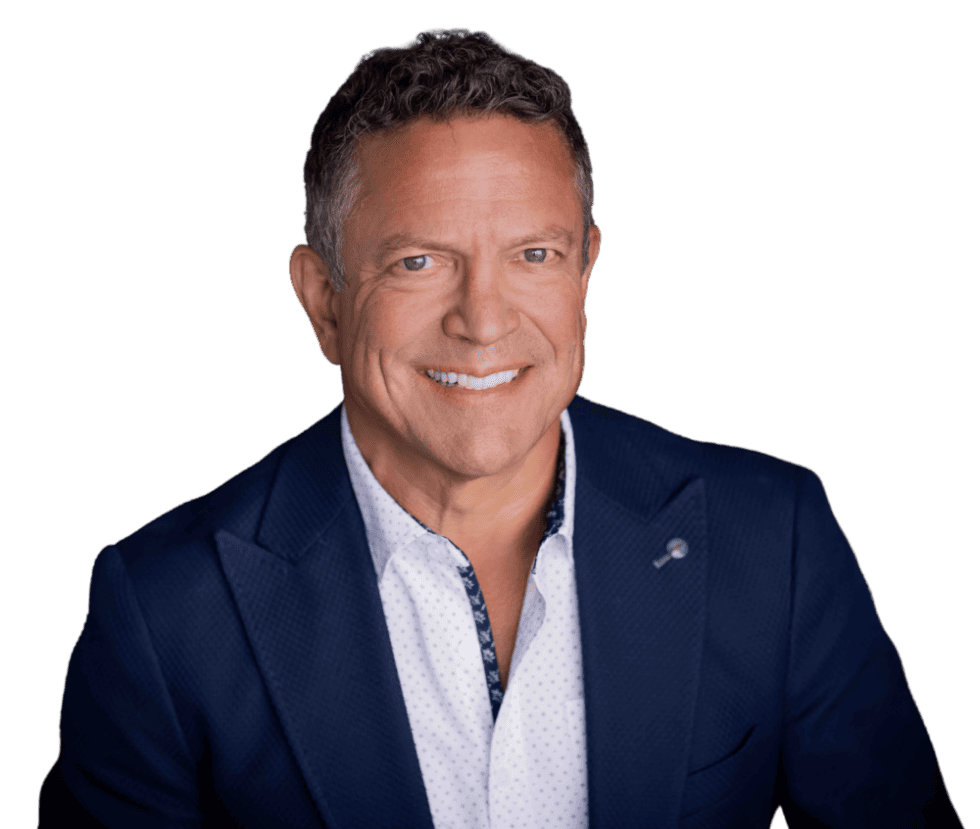
Our founder, Dr. Tyson Cobb, brings the same precision that he has applied to his career as a orthopaedic surgeon to Timberview’s portfolio, and is committed to being a bridge for other professionals in the medical community to get involved. We started as a small group of physicians investing together. Today, our network has grown exponentially because busy professionals need solid wealth-building investments that reliably replace their active income with passive income.
Invest in real estate with confidence.

With the right support and education, an individual can develop a “work-optional” lifestyle, in which an individual has the financial means to choose whether or not they want to work for a living and how much. This means having enough savings, passive income, or investments to support one’s expenses without relying on a traditional job or career.
In a work-optional life, an individual has the flexibility to pursue their passions, interests, and hobbies without being constrained by the need to earn a living. Timberview Capital offers the support to make this type of lifestyle a reality.
Our Portfolio







FAQs
What exactly does Timberview Capital do?
We started as a small group of physicians investing together. Our ability to find superior investment opportunities has allowed our network to grow substantially. Timberview Capital simply formalizes our process and network.
I spent most of my time doing research – researching investment opportunities. My goal is to find the best teams, with the best properties in the best geographic locations. By best teams I mean those with the ability to formulate and execute a business plan with superior returns for their investors. I’m looking for those with a significant collective experience and consistent track record of solid financial performance.
By best properties, I mean strong performing properties with substantial upside. We look for properties that can likely double our money in 2 to 5 years. The best locations will have significant population size and growth. I also look for high job growth and diversity. I like to see high median, household income and high median home price. High income tenants can pay high rents.
When you can check all three boxes, great team-great property-great location, you probably have found a home run opportunity. Keep in mind that these are investments, so there are risks and they don’t all perform as expected. Nevertheless, if they are carefully vetted most of them will perform well.
How is working with Timberview different?
We do the research so you don’t have to. We strive to check all the boxes: a great property, in a great location, with a great team. We are not limited to our own team and resources. We seek out the best teams, with the best properties in the best areas, with the best returns across the United States. At Timberview Capital we invest alongside our partners. With our own money invested alongside yours, we make sure that every deal is fully researched to ensure maximum returns and minimum risk. We work hard to try and find the very best investment opportunities, but investors should also do their own due diligence.
What is an accredited investor?
The Securities and Exchange Commission (SEC) defines an accredited investor as either an individual with gross income exceeding $200,000 in each of the two most recent years or joint income with a spouse exceeding $300,000 for those years and a reasonable expectation of the same income level in the current year.
OR
An individual with with a net worth greater than 1 million excluding their primary residence.
If an offering is classified as a 506C by the SEC only accredited investors are able to invest.
For a 506C investment, you will be required to prove your Accredited Investor status. There are companies that do this for a fee. I recommend asking your CPA for a letter confirming your accredited investor status.
Do I need to be an accredited investor to work with Timberview?
Some of Timberview’s deals are classified as 506(c), which require accredited investor status to participate. However, we also offer 506(b) deals, giving non-accredited investors a chance to get involved. These opportunities are not posted on our website or promoted publicly, so to access them, you’ll need to be on our 506(b) investor list.
If you’re interested, schedule a call via www.timberviewcapital.com/contact to join our investor list and stay informed about 506(b) opportunities. Timberview serves investors of all experience levels, so don’t let beginner status keep you from getting started!
How do I replace my active income with passive income?
There are a lot of ways to do this. My preference is to keep a steady flow of new investments coming into my portfolio as my previous investments go full cycle and are sold. Many of these investments are doubling my money (or more) over 1 to 5 years. This creates exponential growth and a steady flow of capital so I don’t miss new great investment opportunities. Obviously it takes a few years to reach the point that you have a steady flow of assets being sold. The longer you sit on your hands and wait, the longer it will take. I recommend that you spread your capital over several investments when possible. Be careful to choose investments that perform well by carefully vetting the team, the property and the geographic location. If you can check all 3 of these boxes, it will probably be a home run. If you don’t have the ability, time or experience to carefully vet the deals, invest along side of people who do. That’s part of the reason I formed Timberview Capital.
The year I founded Timberview Capital, I lost 3 fantastic investment opportunities because we didn’t raise enough capital to close the deals. As Rod Khleif says – multifamily is a team sport. You don’t have to be great at everything. The larger the network, the better chance we will have the capital to close deals AND the better our deal flow – it’s all about the collective experience, capital and ability that creates success for the entire network.
Individuals score points, but teams win games.
-Zig Zeigler
How do I know that I can trust the General Partner team to have my back?
Timberview invests with real estate teams whose compensation is proportional to the property performance. Therefore, these teams are extremely motivated to do everything in their power to make sure their investors have strong returns because the investors (that’s you) get paid first.
Many of the syndication investments are set up with a preferred return. For example, if you are investing into a syndication as a limited partner, and they have an 8% preferred return, the Profits that are taken out of the investment made from the property go to the limited partners. The private placement memorandum will define exactly how the money flows. In the above example, 8% per year will go to the limited partners before the general partners get any of the profit. Generally, after paying the preferred return to the limited partners, the profits will be split between the general partners who bring the deal and do all the work and the limited partners who put up the money. How the money is split will be detailed in the private placement memorandum document.
“When investing, always be certain that everyone’s interest is aligned with yours and then make sure they have skin in the game.”
-NYT best-selling author, David Osborn
“Real estate…is about the safest investment in the world.”
-Franklin D. Roosevelt
Why is multifamily better than the stock market?
Unlike the stock market where you have no control over the growth of your investment, with multifamily we can force appreciation by upgrading the property/units and raising rents. Timberview joins teams that do the work and are compensated with a portion of the profits. Increasing rent will increase net operating income resulting in a directly proportional increase in property value.
Multifamily is not valued by comparables like single family homes but rather by a multiple of net operating income. It’s simple math; the net operating income divided by the cap rate gives you the property value. Therefore, we increase the value of the property by lowering expenses and increasing rent/income. For example, if we remodel and raise rents $300 on a 150-unit property the increased property value would be roughly $300 x 12 months x 150 units divided by the cap rate (5% for this example) = $10.8 million (less vacancy).
Paper assets like stocks do not grow wealth like cash flowing real assets such as apartments. According to Robert Kiyosaki, stocks and other paper assets are where the poor and middle class invest whereas the wealthy invest in cash-flowing real estate.
“Ninety percent of all millionaires become so through owning real estate.”
-Andrew Carnegie
My financial advisor has my portfolio of stocks diversified. He has even included some REITs. Do I really need real estate investments?
A diversified stock portfolio is not diversified at all – it’s all the same asset class. If the stock market crashes, it’s all going down. To truly diversify one needs to invest in various asset classes, such as real estate. Not a REIT, but rather real real estate that has an address. Real real estate is a much more stable asset class. It is much less volatile than the stock market. It also allows for much better wealth growth over time because of control and significant tax advantages.
Are there tax advantages to commercial real estate investing?
Commercial real estate kicks off significant depreciation to offset taxes. Dr. Cobb became serious about real estate investing in 2019 and has not paid significant taxes since, due to depreciation.
Through the use of cost segregation, commercial real estate can result in bonus depreciation of approximately 30-90% of your investment amount in the year of purchase. President Trump brought back 100% bonus depreciation in 2025. Many people believe this will stimulate the economy and the real estate market.
What is a 1031 exchange and how does it work?
A 1031 exchange allows investors to defer paying capital gains taxes when selling an investment property by reinvesting the proceeds into a new property of equal or greater value. This deferral can continue through multiple exchanges, allowing for the potential growth of wealth without immediate tax consequences.
Can I use a 1031 exchange for any type of property?
No, a 1031 exchange can only be used for “like-kind” properties, which generally means real estate for real estate. However, the properties don’t need to be identical—they just need to be used for investment or business purposes.
Are there any deadlines I need to meet in a 1031 exchange?
Yes, there are two critical deadlines: you must identify the replacement property (you can identify up to three) within 45 days of selling the original property, and the new property must be purchased within 180 days of the sale.
How do I get started with a 1031 exchange?
If you’re interested in using a 1031 exchange to defer taxes on the sale of investment properties, send an email to [email protected] to discuss your goals. We’ll connect you with the right people to guide you through the process and help you comply with the IRS requirements.
I’m an operator or project sponsor — can Timberview Capital help raise capital for my deal?
We work with operators and project sponsors who offer high-quality opportunities that align with our investment philosophy. If you have a strong track record and a compelling deal, we’d love to review it. Please submit your opportunity through our Sponsor Submission Form to begin the process.
Why aren’t preferred returns always paid?
A preferred return means investors receive 100% of the available cash flow until their stated return is met (for example, 8%). This gives investors priority over the sponsor when distributions are made.
However, preferred returns depend on the actual performance of the investment. If a property or project doesn’t generate enough cash flow in a given period, payments may be delayed. This doesn’t mean the preferred return is lost—it accrues and is paid out once there is sufficient cash flow. The preferred return is designed to prioritize investors, but it is not a guaranteed payment on a fixed schedule.
How can commercial real estate investments be structured for maximum tax efficiency?
One of the major advantages of investing in commercial real estate properties is the ability to take advantage of various tax benefits. For example, commercial real estate investors can deduct a range of expenses related to their property, including mortgage interest, property taxes, insurance, repairs, and maintenance.
In addition, commercial real estate investors can also take advantage of cost segregation, a tax planning strategy that allows them to accelerate depreciation and reduce their taxable income. Cost segregation involves separating a property’s assets into different categories based on their useful life and applying accelerated depreciation to the shorter-lived assets. This can result in significant tax savings for commercial real estate investors.
What factor does rent growth play in multifamily investments?
Rent growth is the primary fuel for adding value to the property. An investment’s returns can be maximized by choosing locations that feature substantial population and job growth.
What are some of the other advantages of commercial real estate investing?
Appreciation of commercial real estate property can be dramatic in times with significant inflation. While cash and cash equivalent investments are being depleted by inflation, the commercial real estate investor is experiencing significant growth.
Leverage can be an extreme multiplier for the real estate investor. For example, if you buy a 10-million-dollar apartment complex for 3 or 4 million down and finance the other 60-70%. Even though you didn’t pay 10 million dollars out of your pocket but rather the bank covered 60-70% of the property, you still get all of the profits and depreciation on the 10-million-dollar purchase.
Why would I want to trust a real estate syndicator? I have a long-term relationship with my financial advisor.
Syndicators of real estate are general partners that do the work and bring the deal. They get paid after the limited partners who bring the money. Syndicators are incentivized and motivated to make the limited partners money, because until the limited partners are paid, they don’t get to share any of the profit.
I’m new to real estate. How do I get started?
Spend as much time as possible looking at opportunities. The more deals you vet, the faster you will get comfortable sorting out which deals are right for you. Give us a call – we are happy to expedite your journey and extend advice on how to break through the glass ceiling that all investors have to deal with.
What if I don’t have enough money to make the minimum investment?
Some sponsors will allow investments below the minimum amount which is often between $50,000 and $100,000. Some can be $500,000 or more.
If the investment is a 506B, they are limited by SEC regulations to a maximum of 35 non-accredited investors. If you are a non-accredited investor and try to invest below the minimum and they reach the maximum number of non-accredited investors, you will almost surely get pushed out of the deal.
One option is to join with another investor, family member or friend, and pool your money and form a LLC and invest together. A group can also invest together through a Special Purpose vehicle.
What is a Roth rollover and how does it benefit investors?
A Roth rollover is the process of converting funds from a traditional IRA or 401(k) into a Roth IRA. While you pay taxes on the converted amount in the year of the rollover, future growth and withdrawals from the Roth IRA are entirely tax-free, providing substantial long-term tax benefits in retirement.
When should I consider a Roth rollover?
You should consider a Roth rollover anytime you want to save on future taxes and maximize the long-term growth of your wealth. By rolling over to a Roth IRA, your investments can grow tax-free, allowing you to enjoy tax-free withdrawals in retirement.
Are there income limits for contributing to a Roth IRA?
Yes, there are income limits for directly contributing to a Roth IRA. However, you can still convert funds from a traditional IRA to a Roth IRA regardless of your income through a Roth conversion (also known as a “backdoor” Roth).
Will I owe taxes when rolling over to a Roth IRA?
Yes, you’ll owe taxes on any pre-tax contributions and earnings in your traditional IRA or 401(k) that you convert to a Roth IRA. The advantage is that future withdrawals from the Roth IRA will be tax-free.
What is a discounted Roth rollover?
A discounted Roth rollover is a specific type of Roth rollover where you convert assets that are temporarily devalued. This allows you to pay taxes on a lower asset value during the conversion, reducing your immediate tax burden. Once the asset appreciates in the Roth account, future gains can be withdrawn tax-free.
How do tax savings of a self-directed retirement account differ from tax savings with a Roth?
A self-directed retirement account (e.g., a traditional IRA or 401(k)) allows you to defer taxes on investment gains until you withdraw the funds in retirement, at which point the withdrawals are taxed as ordinary income.
In contrast, a Roth IRA offers tax-free growth, meaning you pay taxes on contributions upfront, but your withdrawals—including gains—are entirely tax-free in retirement. Roth accounts are ideal for those expecting to be in a higher tax bracket later in life.
How do I get started with a Roth rollover?
If you’re considering a Roth rollover to optimize your retirement strategy and want to learn how it can benefit you, email [email protected]. We’ll introduce you to professionals who can help you navigate the process and determine if it’s the right move for your financial goals.
If these deals are so great, why open them to outside investors?
Timberview Capital’s investment portfolio exceeds $2 billion, a scale that would be impossible to achieve individually. By partnering with investors, we can access larger, higher-quality opportunities. This collaborative model not only strengthens our ability to secure top-tier properties but also creates a pathway for better returns for everyone involved.
Are there ways to use Real Estate Investments to offset taxes associated with Surgery Center Ownership Income?
Yes, most income from surgery center ownership is passive. Check with your CPA to confirm that your’s is set up this way. If your income from surgery center ownership is passive then the taxes associated from that income can be offset with depreciation from limited partner investments in real estate syndications.
Timberview Capital
Ready to Build Wealth Through Commercial Real Estate?
Join accredited investors who are already growing their portfolios with Timberview Capital. Passive income, tax advantages, and a team committed to your financial success.
The testimonials, statements, and opinions presented are applicable to the individuals listed. Results will vary and may not be representative of the experience of others. The testimonials are voluntarily provided and are not paid, nor were they provided with free products, services, or any benefits in exchange for said statements. The testimonials are representative of client experience, but the exact results and experience will be unique and individual to each client. All offers and sales of any securities will be made only to Accredited Investors, which, for natural persons, are investors who meet certain minimum annual income or net worth thresholds or hold certain SEC-approved certifications. Any securities that are offered in reliance on certain exemptions from the registration requirements of the Securities Act of 1933 (primarily Rule 506C of Regulation D and/or Section 4(a)(2) of the Act) and are not required to comply with specific disclosure requirements that apply to registrations under the Act. The SEC has not passed upon the merits of, or given its approval to, any securities offered by Timberview Capital LLC, the terms of the offering, or the accuracy or completeness of any offering materials. Any securities that are offered by Timberview Capital LLC are subject to legal restrictions on transfer and resale, and investors should not assume they will be able to resell any securities offered by Timberview Capital LLC. Investing in securities involves risk, and investors should be able to bear the loss of their investment. Any securities offered by Timberview Capital LLC are not subject to the protections of the Investment Company Act. Any performance data shared by Timberview Capital LLC represents past performance, and past performance does not guarantee future results. Neither Timberview Capital LLC nor any of its funds is required by law to follow any standard methodology when calculating and representing performance data, and the performance of any such funds may not be directly comparable to the performance of other private or registered funds.